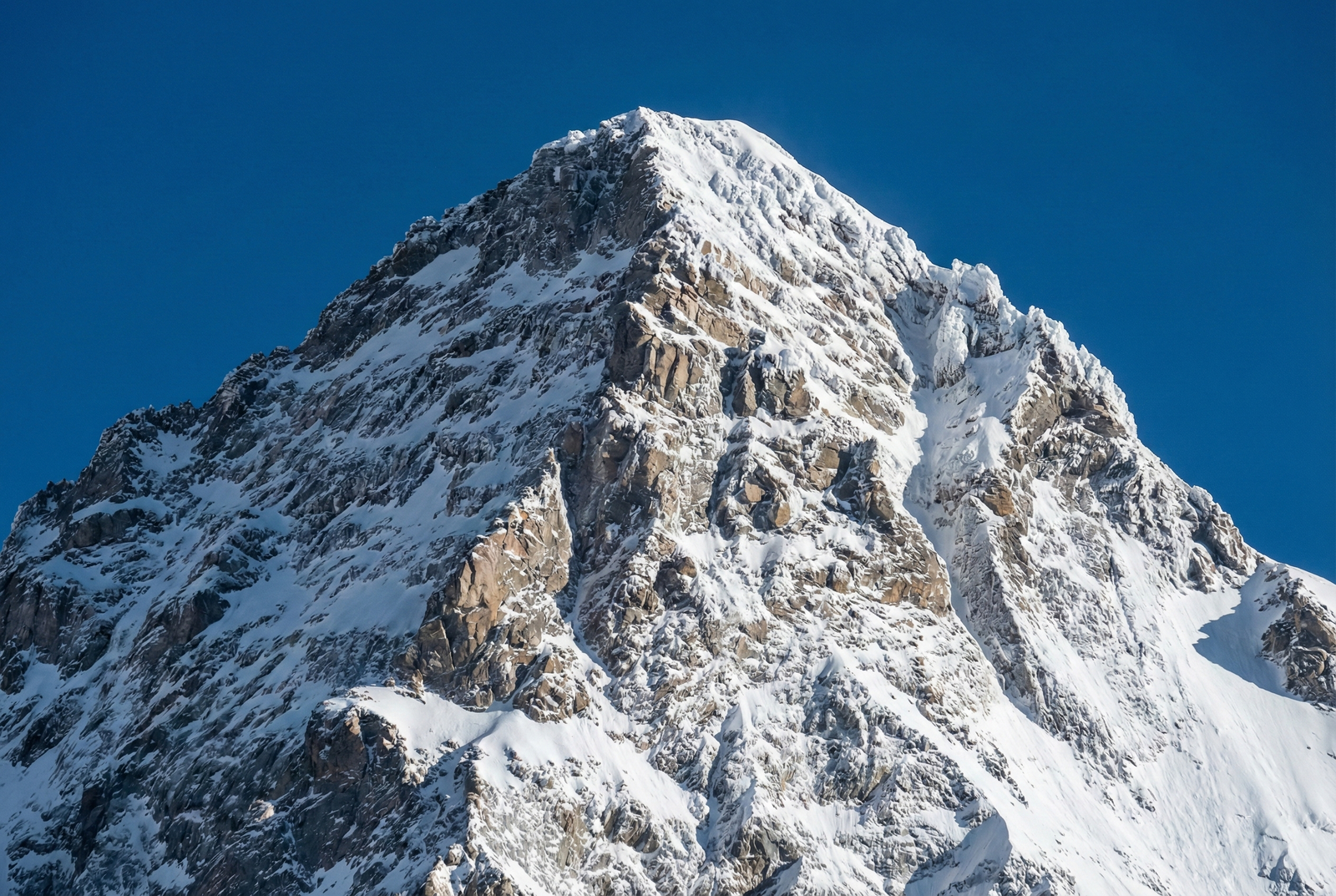
The short answer: Everest Base Camp is the better first high-altitude trek, and K2 Base Camp is the greater expedition. EBC gives you teahouse beds, established infrastructure and a sociable trail. K2 gives you three weeks of raw glacier wilderness, a fraction of the crowds, and an amphitheatre of giants at Concordia that many mountaineers rate as the finest mountain view on earth. Which one you should do depends on your experience, your time, and what you want the mountains to feel like. This guide compares them honestly, including the cases where we would tell you to go to Nepal.
A note on who is writing: North Nomads is a licensed operator based in Skardu, Pakistan. We run the K2 Base Camp trek ourselves. We do not sell Everest treks, so where EBC is the right answer for you, we say so.
The comparison at a glance
| K2 Base Camp (Pakistan) | Everest Base Camp (Nepal) | |
|---|---|---|
| Highest point | Concordia 4,600 m; K2 BC approx. 5,150 m; Gondogoro La option 5,585 m | Kala Patthar 5,545 m; EBC itself 5,364 m |
| Typical duration | 18 to 21 days door to door (our itinerary is 20) | 12 to 14 days door to door |
| Accommodation | Full camping expedition; no settlements beyond Askole | Teahouses with beds, meals and stoves in every village |
| Trail traffic | Roughly 1,500 to 2,000 trekkers per season | Roughly 35,000 or more trekkers per year |
| Terrain | Long glacier travel on the Baltoro; rougher, less defined trail | Well-established path, no glacier travel until the final approach |
| Permits | Restricted zone: permit, licensed guide and briefings required; trekking visa category | Standard permits (national park and local); independent trekking possible |
| Getting there | Fly or drive Islamabad to Skardu, jeep to Askole | Fly Kathmandu to Lukla |
| Typical guided cost | USD 2,500 to 5,000 depending on group size and service level | USD 1,200 to 2,500 for comparable guided packages |
| Season | Mid June to early September | March to May and late September to November |
| Best for | Experienced trekkers who want wilderness and scale | First-time high-altitude trekkers, tighter schedules, solo travellers |
Difficulty: which trek is harder?
K2 Base Camp is meaningfully harder, and it is worth being precise about why, because it is not primarily the altitude. Everest Base Camp actually reaches a slightly higher point than K2 Base Camp. The difference is everything around the altitude.
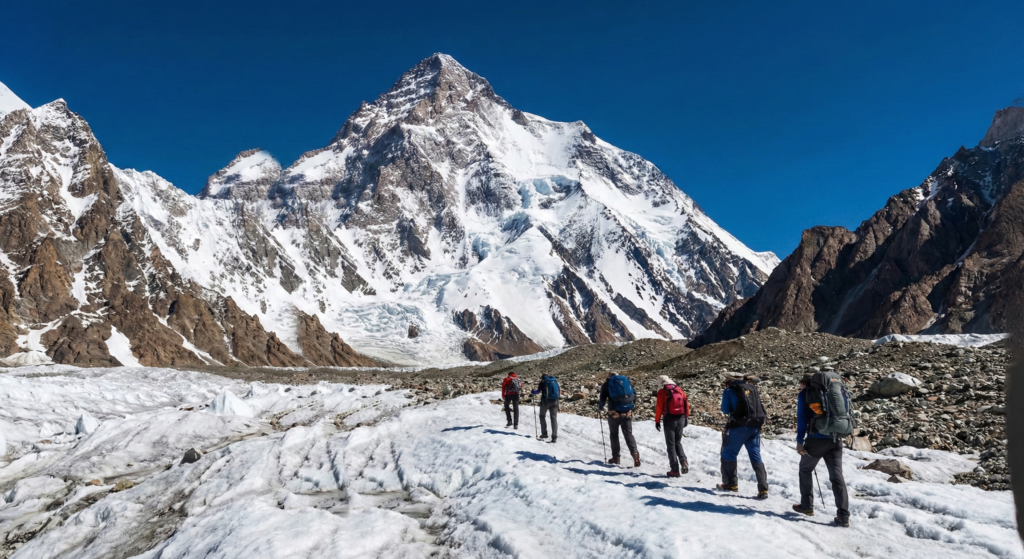
- Terrain. Roughly half of the K2 route is on the Baltoro Glacier: moraine, ice and boulder fields that demand attention with every step. EBC is a walked-in path with stone steps in places.
- Support. On EBC you finish each day in a teahouse with a stove and a menu. On the Baltoro you camp every night for two weeks; comfort depends on your operator’s kitchen crew and equipment.
- Commitment. EBC has villages, helicopter evacuation on demand and phone signal for much of the route. The Baltoro has none of these. Once you are three days past Askole, the way out is the way you came.
- Weather exposure. The Karakoram season is short and storms are heavier. Buffer days are not a luxury, they are part of the plan.
If you have not trekked above 4,000 metres before, do EBC first, or build up on a shorter Karakoram route like our 10-day Nangma Valley trek, which delivers the granite drama at half the commitment.
Scenery: Khumbu postcard versus Karakoram scale
This is subjective, so here is the honest framing. The Everest trail is beautiful in a composed way: Ama Dablam is arguably the most photogenic mountain on the planet, and the route threads Sherpa villages, monasteries and rhododendron forest. The Karakoram does not do composed. It does scale. From Concordia you stand inside a ring of four 8,000-metre peaks and giants like Masherbrum and the Trango Towers, with the Baltoro running through it like a frozen motorway. Trekkers who have done both almost universally describe K2 as the wilder, more overwhelming landscape, and EBC as the richer cultural journey.
Crowds and character
The numbers tell the story: tens of thousands of trekkers a year on the Everest trail against a couple of thousand on the Baltoro. On EBC in season you will queue at suspension bridges and share teahouses with trekkers from a dozen countries, which some people love. On the K2 route you can walk for hours seeing nobody outside your own expedition. If solitude is the point of the mountains for you, this single row of the table may decide the whole question.
Cost: why K2 costs more and where the money goes
K2 looks more expensive until you compare like with like. An EBC teahouse trek outsources your food and lodging to the villages you pass through. A Baltoro expedition carries everything: tents, kitchen, food for three weeks, porters whose wages are set by the government, and permit fees for a restricted zone. You are paying for a self-contained expedition, not a walking holiday. Our advice on judging any K2 quote: ask exactly how many staff support the group, what the porters are paid and fed, and whether evacuation cover is arranged. The cheap quotes economise on precisely those three lines.
Logistics and permits
Nepal is simpler, and it is fair to say so. EBC needs standard permits that any agency, or you yourself, can arrange in a day in Kathmandu. K2 sits in a restricted zone: foreigners need a trekking permit, a licensed guide, formal briefings, and the correct visa category, and the paperwork takes weeks rather than days. A licensed operator handles all of it, but it means K2 is a trek you commit to months out, not one you improvise. Flights are the other planning difference: Lukla flights are famously weather-prone, and so is the Islamabad to Skardu flight. In Pakistan you have a genuine backup that Nepal lacks: the Karakoram Highway, a spectacular two-day overland route we build into itineraries when the forecast argues with the airline.
The verdict: which should you choose?
- Choose Everest Base Camp if this is your first time above 4,000 metres, you have under two weeks, you want teahouse comfort and a sociable trail, or you are trekking solo without an operator.
- Choose K2 Base Camp if you have high-altitude experience, you can give it three weeks, you want wilderness over infrastructure, and standing at Concordia inside the greatest mountain amphitheatre on earth sounds like the point of the whole exercise.
- Do both, in that order. The trekkers who arrive with EBC already behind them consistently have the best time on the Baltoro. Nepal teaches you your body at altitude; the Karakoram is where you spend that knowledge.
If K2 is calling, start with our complete K2 Base Camp trek guide for the day-by-day route, then look at the 20-day guided expedition we run each season, or send us your dates and we will tell you honestly whether this is your year for it.
Frequently asked questions
Is K2 Base Camp harder than Everest Base Camp?
Yes. Although Everest Base Camp reaches a slightly higher altitude, the K2 trek is harder overall: roughly half the route is glacier travel on the Baltoro, there are no teahouses so you camp for around two weeks, evacuation is slower, and the weather window is shorter. K2 Base Camp suits trekkers who already have high-altitude experience.
Which is higher, K2 Base Camp or Everest Base Camp?
Everest Base Camp is higher. EBC sits at 5,364 m and its classic viewpoint Kala Patthar at 5,545 m. On the K2 trek, Concordia is at about 4,600 m and K2 Base Camp at roughly 5,150 m, with the optional Gondogoro La crossing reaching 5,585 m.
How much does the K2 Base Camp trek cost compared to EBC?
Guided K2 Base Camp treks typically cost USD 2,500 to 5,000, against USD 1,200 to 2,500 for a comparable guided Everest Base Camp package. K2 costs more because it is a full camping expedition in a restricted zone: tents, kitchen crew, three weeks of food, government-set porter wages and permit fees are all included in the price.
Can you trek to K2 Base Camp without a guide?
No. The K2 Base Camp route lies in a restricted trekking zone where foreigners must have a permit, a licensed guide and formal briefings, arranged through a licensed operator. By contrast, Everest Base Camp can be trekked independently with standard permits.
Is the K2 Base Camp trek less crowded than Everest?
Dramatically. The Everest Base Camp trail sees roughly 35,000 or more trekkers a year, while the K2 route sees around 1,500 to 2,000 per season. On the Baltoro Glacier it is normal to walk for hours without seeing anyone outside your own group.
When is the best time for each trek?
K2 Base Camp runs mid June to early September, when the Baltoro route is navigable. Everest Base Camp has two seasons: March to May and late September to November. If your holiday time falls in mid-summer, the Karakoram is in season while the Khumbu is in monsoon.