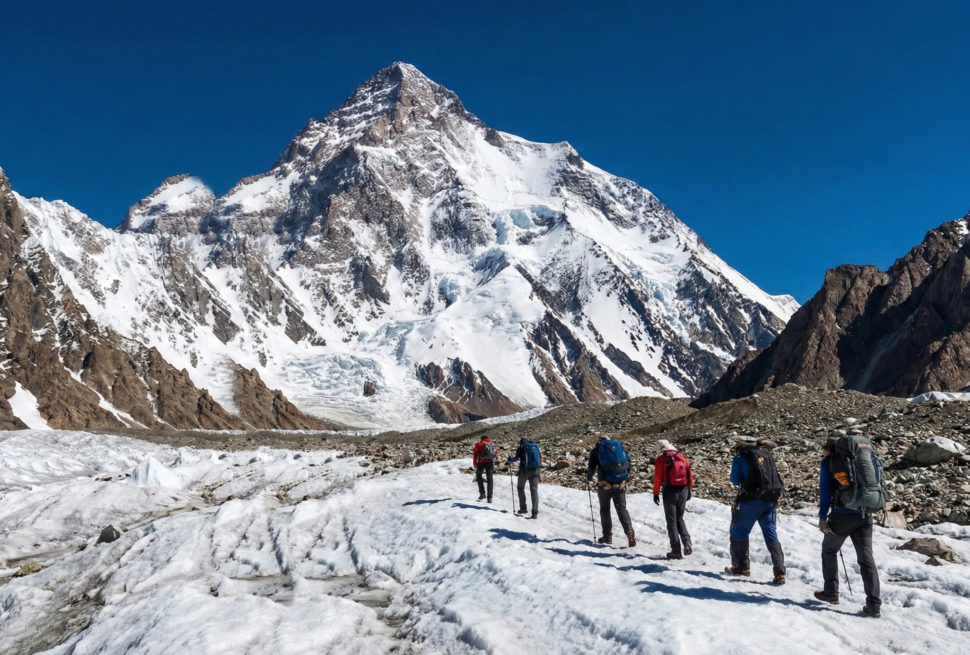
The Nangma Valley trek is a 3 to 5 day walk into a granite amphitheatre in the Hushe region of Gilgit-Baltistan, Pakistan, starting from Kanday village about four hours’ drive from Skardu. People call it the Yosemite of Pakistan because of the sheer rock walls, towers like Amin Brakk and the Great Tower of Nangma, that rise vertically from a green valley floor. It is the rare Karakoram trek that is genuinely achievable for fit beginners while still feeling like an expedition. This guide covers the route day by day, difficulty, the best months, permits, costs, food, and the details we know because we live here and run this trek ourselves.
Nangma Valley at a glance
| Detail | What to expect |
|---|---|
| Location | Hushe region, Ghanche district, Gilgit-Baltistan, Pakistan |
| Trailhead | Kanday village, approx. 2,600 m, about 4 hours by road from Skardu via Khaplu |
| Trekking days | 2 to 4 on the trail; our full itinerary is 10 days door to door including Skardu, Khaplu and buffer time |
| Key camps | Mingulo Broq approx. 3,500 m; upper Nangma Valley camp approx. 3,950 m |
| Optional high point | Amin Brakk Base Camp day hike, approx. 4,500 m |
| Difficulty | Moderate: short trekking days on a gradual trail, with altitude the main factor |
| Permits | None: Nangma lies in an open trekking zone |
| Season | Late May to late September; July and August are the greenest |
| Accommodation | Camping; there are no lodges beyond Kanday |
| Mobile signal | None beyond the trailhead; we carry satellite communication |
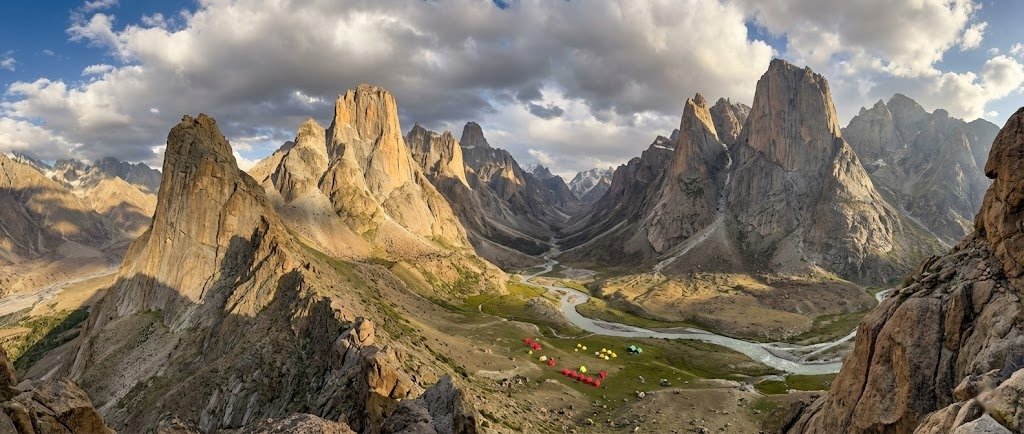
Why trekkers call it the Yosemite of Pakistan
The comparison comes from the geology: like Yosemite, Nangma is a glacial valley walled by enormous vertical granite. Big-wall climbers have been coming here quietly for decades to attempt faces like Amin Brakk, whose summit wall overhangs for hundreds of metres. But the nickname undersells the place in one way: your campsite in Nangma sits at roughly the height of Yosemite’s highest rim, and the towers keep going from there. What makes it special for trekkers rather than climbers is the ratio of reward to effort. In two short walking days you stand somewhere that looks like the deep Karakoram, without glacier travel, without technical terrain, and without the three-week commitment of the K2 Base Camp trek.
The route, day by day
Getting to the trailhead: Skardu to Kanday
From Skardu the road runs east through Khaplu, a historic Balti town with a restored palace worth an afternoon on its own, then south into the Hushe Valley to Kanday. The drive takes around four hours in a jeep. Most itineraries, including ours, overnight in Skardu or Khaplu first, which doubles as useful acclimatisation since Skardu itself sits at 2,230 m.
Day 1: Kanday to Mingulo Broq (approx. 3,500 m)
The trail leaves Kanday across the river and climbs steadily through a narrowing valley, crossing a pair of suspension bridges over side streams. Count on 3 to 4 hours of walking at a sensible pace. Mingulo Broq is a green shelf of pasture beside the water, used by shepherds from Kanday in summer: you will likely share the meadow with goats, yaks and the families who graze them. It is a beautiful first camp and, at this altitude, a smart place to sleep before going higher.
Day 2: Mingulo Broq to the upper valley (approx. 3,950 m)
A shorter day, 2 to 3 hours, and the most dramatic walking of the trek. The valley opens and the towers arrive one by one: Denbor, the Great Tower, and finally Amin Brakk’s vast prow. Camp sits on open meadow beneath them beside a glacial stream. If the sky is clear, stay up after dinner: with no settlements and no light for many kilometres, the Milky Way here is the brightest most guests have ever seen.
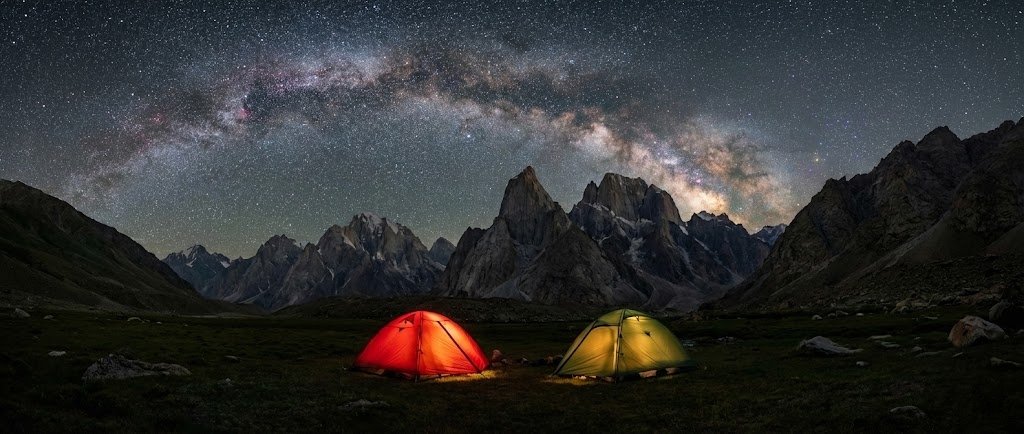
Day 3: Amin Brakk Base Camp side trip (approx. 4,500 m)
The best use of a full day in the valley is the walk up to Amin Brakk Base Camp. It is a steady 500-metre gain on rougher ground, harder than anything on the way in, and entirely optional. Standing under the wall itself, watching for the tents of whichever climbing expedition is attempting it that season, is the moment most trekkers name afterwards as the highlight. Anyone preferring a quiet day can explore the valley floor, photograph, or simply sit: the valley rewards stillness.
Day 4: Descend to Kanday
The walk out retraces the route in 3 to 4 hours, downhill nearly all the way. Many groups, ours included, take lunch with a host family in Kanday before driving back towards Khaplu or Skardu.
How hard is the Nangma Valley trek really?
Honestly: this is one of the most achievable treks in the Karakoram, and one of the best first treks in Pakistan, but “easy” is the wrong word at nearly 4,000 metres. The walking itself is moderate, short days on a mostly gradual trail with no technical sections and no glacier. The altitude is the real variable. Camp is high enough that some people feel it: a headache on the first night, heavier legs on the Amin Brakk day. Reasonable fitness, a sensible pace and a night at Mingulo Broq before going higher deal with it for almost everyone. If you can comfortably walk uphill for four hours with a daypack, you can do Nangma.
Best time to go
| Months | Conditions |
|---|---|
| Late May to June | Valley turns green, snow patches linger high, rivers run strong with meltwater. Quietest period. |
| July to August | Peak season: warmest nights, greenest pasture, shepherds in residence at Mingulo Broq, most reliable weather. |
| September | Cooler, golden light, exceptionally clear skies for photography and stargazing. Nights drop sharply below freezing at the upper camp by month’s end. |
| October to April | Not recommended for trekking: heavy snow closes the upper valley. |
Permits, guides and the honest independent-trekker question
Nangma Valley lies in an open trekking zone, which means foreigners need no trekking permit and, legally, no guide. We would rather tell you that plainly than pretend otherwise, because you will read it elsewhere anyway. So here is the honest case for going supported instead: everything above Kanday is carried in, so an independent trek means arranging your own porters, food and kitchen in a village with no booking infrastructure, in Balti, at fair wages you have no way to benchmark. There is no phone signal and no rescue infrastructure beyond what you bring. And the difference between a good trip and a great one here is local: which shelf of the meadow drains best in rain, which family bakes bread at Mingulo Broq, when the light hits Amin Brakk. That knowledge lives in the Hushe Valley, and hiring it locally is also how trekking money actually reaches these villages. Our 10-day Nangma Valley trek runs with our own guides and kitchen crew, and includes Khaplu and Skardu on either side.
Food, culture and camp life
This is a Balti valley, and the culture is half the trip. Expect apricot orchards in Kanday, salted butter tea if you are invited in, and shepherd families at Mingulo Broq living a summer transhumance that has not changed in generations. On our departures the kitchen crew cook Balti dishes alongside familiar trekking food: balay noodle soup after a cold day is a genuine event. A cultural note worth knowing: these are conservative villages, and modest dress and asking before photographing people, especially women, is basic respect that will be repaid with remarkable warmth.
What to pack for Nangma
- A four-season sleeping bag rated to at least minus 5°C for the upper camp (ours are provided on guided departures)
- Broken-in boots with ankle support: the Amin Brakk day is rough moraine
- Sun protection rated for altitude: SPF 50, sunglasses, brimmed hat. UV at 4,000 m is fierce
- Layers over bulk: warm mornings, hot valley afternoons, freezing nights
- A headtorch, spare batteries and a power bank; there is no electricity beyond Kanday
- Cash in small notes for Kanday and Khaplu; there are no card machines in the Hushe Valley
How Nangma compares to our other treks
| Trek | Days | Character |
|---|---|---|
| Nangma Valley | 10 | Granite big-wall drama, moderate effort, best first Karakoram trek |
| Fairy Meadows & Nanga Parbat | 6 | Shortest and gentlest: meadows and lodges beneath an 8,000 m wall |
| Rakaposhi Base Camp | 9 | Hunza culture plus a glacier base camp; a step up in effort |
| K2 Base Camp | 20 | The full expedition: three weeks, the Baltoro, Concordia. See our K2 vs Everest comparison |
Frequently asked questions
How difficult is the Nangma Valley trek?
Moderate. Walking days are short, 2 to 4 hours on a mostly gradual trail with no glacier travel or technical terrain. The main challenge is altitude: camps sit at roughly 3,500 m and 3,950 m, so a night at Mingulo Broq before going higher, and a steady pace, matter more than raw fitness. Fit beginners complete it comfortably.
Do I need a permit for Nangma Valley?
No. Nangma Valley lies in an open trekking zone, so foreign trekkers need no permit and no mandatory guide. Most visitors still go with a local operator because everything above the roadhead must be carried in, there is no phone signal, and porters, food and camp logistics are far easier arranged through the Hushe Valley communities themselves.
Where does the Nangma Valley trek start?
At Kanday village in the Hushe Valley, Ghanche district, at about 2,600 m. Kanday is roughly a four-hour drive from Skardu via the town of Khaplu. Most itineraries overnight in Skardu or Khaplu first, which helps acclimatisation.
Why is Nangma Valley called the Yosemite of Pakistan?
Because, like Yosemite, it is a glacial valley walled by enormous vertical granite formations, including Amin Brakk and the Great Tower of Nangma, which attract big-wall climbers from around the world. The comparison understates the altitude: the valley camp sits at nearly 4,000 m, around the height of Yosemite’s highest points.
When is the best time to trek Nangma Valley?
Late May to late September. July and August offer the warmest nights, the greenest meadows and the most settled weather. September brings colder nights but exceptional clarity for photography and stargazing. The upper valley closes with snow from roughly October to April.
How many days do you need for Nangma Valley?
The trekking itself takes 2 to 4 days from Kanday, including an optional day hike to Amin Brakk Base Camp at about 4,500 m. Door to door from Islamabad, allow 8 to 10 days once you include the journey to Skardu, the drive to the trailhead, Khaplu, and a buffer day for the weather-dependent Skardu flight.
Ready to stand under the towers? See the full 10-day Nangma Valley trek itinerary, read our honest guide to safety in northern Pakistan, or send us your dates and a planner in Skardu will build the trip around them.