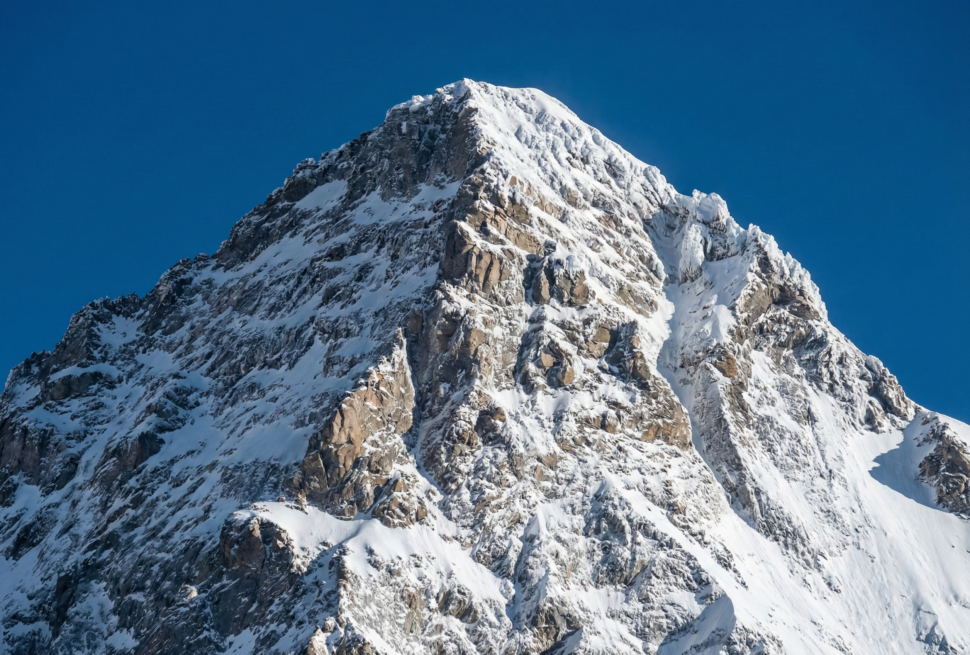
The short answer: yes, the northern trekking regions of Pakistan are safe for foreign tourists in 2026, and they have been for years. Gilgit-Baltistan, the region that holds Skardu, Hunza, K2, Nanga Parbat and every trek we operate, has one of the best tourist safety records in South Asia. The longer answer is more useful, because Pakistan is really two very different places, and understanding that difference is what lets you plan with confidence. This guide is written by our team: people who were born here, live here, and walk these trails for a living.
What this guide covers
- Why “is Pakistan safe” is really two questions
- Region by region: where tourists actually go
- What foreign government advisories really say
- What safety looks like on the ground
- Solo and female travellers
- The real risks: altitude, roads and weather
- What we do on every North Nomads trek
- Frequently asked questions
Why “is Pakistan safe” is really two questions
Pakistan is a country of over 240 million people spanning coastline, megacities, deserts and the highest mountain ranges on earth. Asking whether it is safe is like asking whether “the Americas” are safe: the answer depends entirely on where you stand.
There are, in practice, two Pakistans for a traveller. The first is the northern mountain corridor: Islamabad, the Karakoram Highway, Gilgit, Hunza, Skardu and the valleys of Gilgit-Baltistan. This is where virtually all foreign trekkers go, it is where tourism is a pillar of the local economy, and it is calm, welcoming and heavily invested in keeping visitors safe. The second Pakistan is the border regions: parts of Balochistan and areas along the Afghan frontier. These have genuine security problems, they are subject to travel restrictions, and no reputable trekking itinerary goes anywhere near them.
Every trek North Nomads operates, from Fairy Meadows to K2 Base Camp, takes place entirely inside the first Pakistan. The distance between our trailheads and the areas that generate the headlines is measured in many hundreds of kilometres, with the full breadth of the country in between.
Region by region: where tourists actually go
| Region | Who goes there | Practical reality for tourists |
|---|---|---|
| Gilgit-Baltistan (Skardu, Hunza, Khaplu) | Nearly all foreign trekkers | The safest part of the country for visitors. Low crime, strong local hospitality culture, police checkpoints that log every foreign traveller’s movement. Tourism is the region’s lifeblood. |
| Islamabad | Arrival city for almost everyone | A planned, green, orderly capital. Most trekkers spend one night here before flying or driving north. |
| Lahore and Karachi | City tourism, not trekking | Rewarding but require normal big-city awareness, as anywhere with millions of people. Not on a trekking itinerary unless you add them. |
| Khyber Pakhtunkhwa valleys (Swat, Chitral) | Some domestic tourism, some foreign | Popular and largely calm, though we do not operate here and some districts require permissions. |
| Balochistan and Afghan border areas | Effectively no tourists | Subject to genuine security concerns and formal restrictions. Not connected in any way to the northern trekking circuit. |
One detail that surprises many first-time visitors: in Gilgit-Baltistan you will pass through regular police checkpoints where officers record your passport details. It can feel bureaucratic, but it exists so that the authorities know where every foreign visitor is, and it is one reason the region’s record with tourists is so strong.
What foreign government advisories really say
Government travel advisories are written for entire countries, and they weight worst-case regions heavily. The UK, US and most European advisories advise against travel to specific border areas of Pakistan, and they are right to. The same documents treat the northern areas differently, and several governments have softened their guidance for the tourist corridor in recent years as conditions have kept improving.
Our advice is to read your government’s advisory in full rather than the headline, check which regions the warnings actually name, and note what it says about Gilgit-Baltistan specifically. Then check your travel insurance: most major insurers cover trekking in Gilgit-Baltistan without issue, though high-altitude cover above 4,000 metres is a separate add-on with some policies, and worth confirming for treks like K2 Base Camp.
What safety looks like on the ground
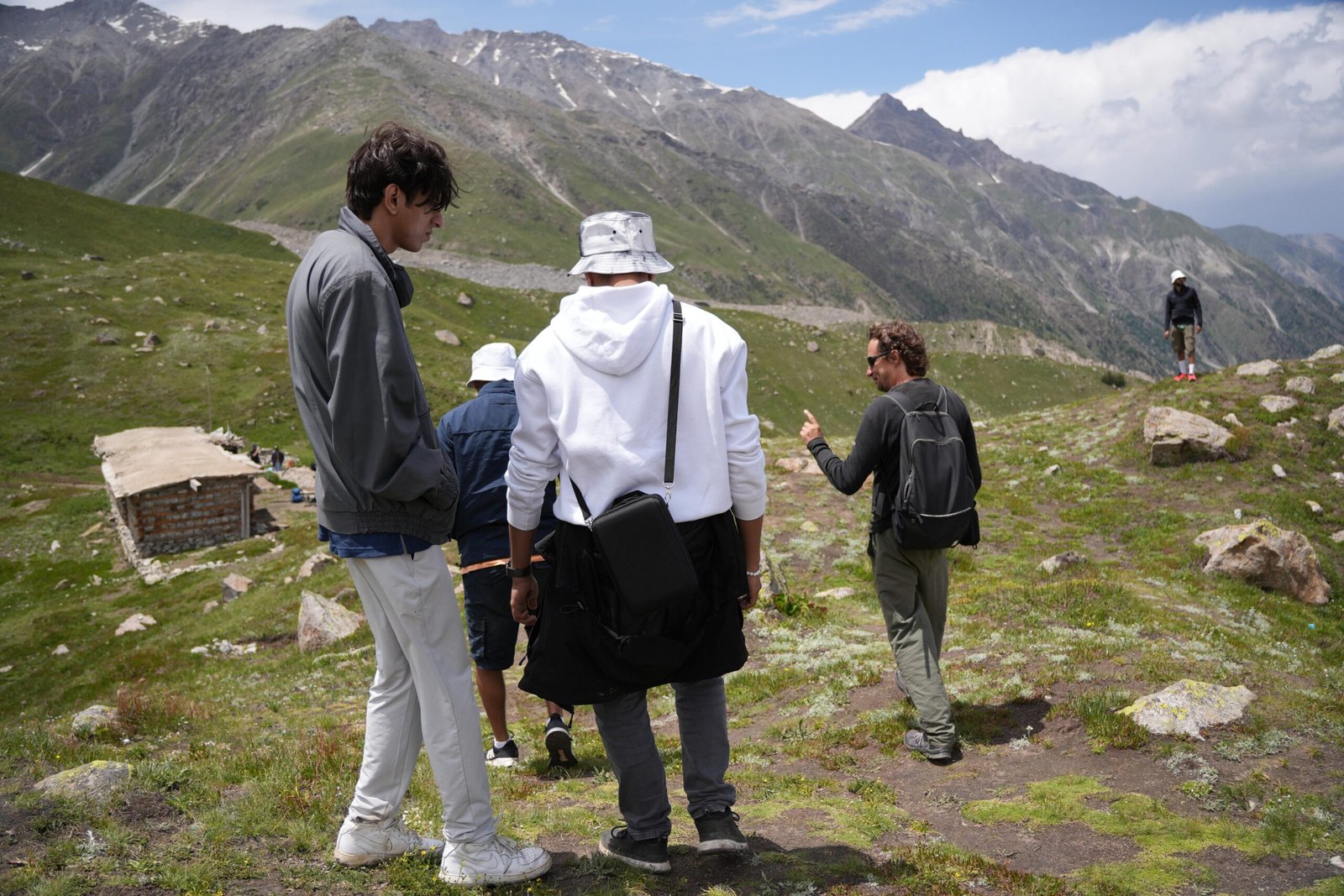
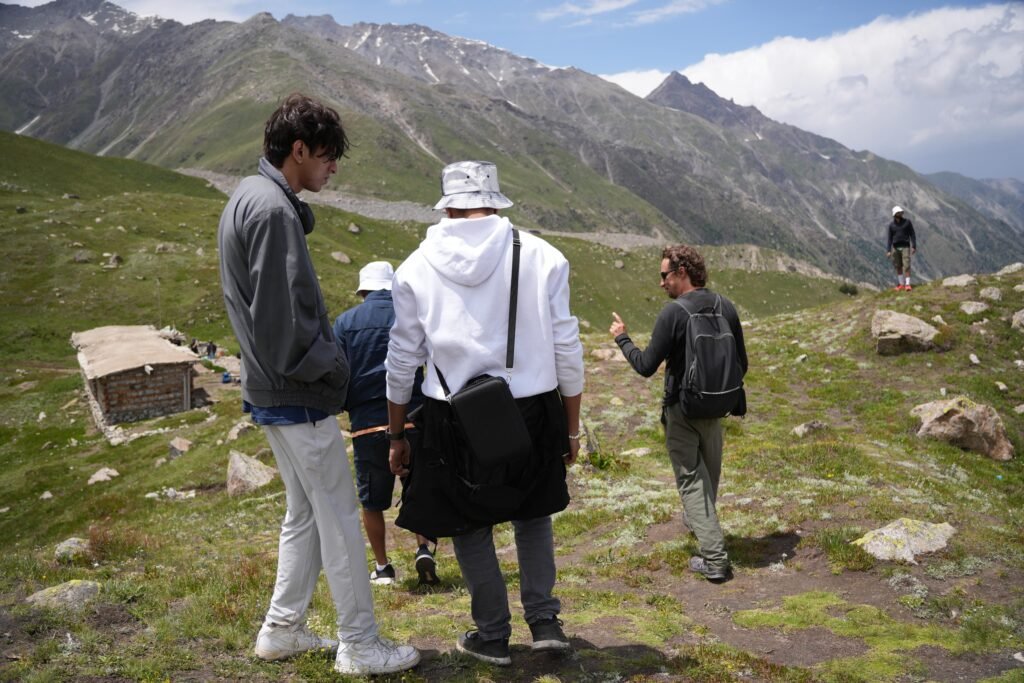
Statistics reassure, but texture is what most people are missing. Here is what a trekking trip in northern Pakistan actually feels like. You land in Islamabad and are met by your operator. You fly to Skardu, an hour over some of the most dramatic terrain on the planet, or drive the Karakoram Highway over two days. From there everything is organised territory: licensed guides, registered routes, villages that have hosted mountaineers since the 1950s.
- People will look after you. Hospitality in Balti and Hunzai culture is not a tourism slogan, it is a social rule. Guests are a responsibility. Trekkers routinely describe locals going far out of their way to help.
- Your movements are known. Between checkpoint registration and your operator’s own logistics, someone always knows where your group is. On remote treks we carry satellite communication because there is no mobile signal, not because there is danger from people.
- The trails are quiet. The Karakoram sees a fraction of the foot traffic of the Nepali Himalaya. The “crowd risks” of busier trekking regions, from theft in teahouses to trail congestion, barely exist here.
- Petty crime against tourists is rare in the north. Normal travel sense still applies in cities, as it does anywhere.
Solo and female travellers
More women trek in northern Pakistan every year, both solo and in groups, and the overwhelming majority report positive experiences. Gilgit-Baltistan is conservative but notably relaxed compared with much of the country, and foreign women are treated first as guests. Honest notes: dressing modestly (loose clothing covering shoulders and knees; a headscarf only for mosques) earns respect and ease. Staring happens, particularly outside tourist areas, and it is almost always curiosity rather than threat. On a guided trek these questions mostly dissolve, because you are travelling with a team that manages every interaction point. If you are a woman considering trekking here and want a direct conversation about it, write to us and we will answer plainly, including putting you in touch with women who have trekked with us.
The real risks: altitude, roads and weather
Here is the honest part that safety articles built for reassurance skip: the genuine risks of trekking in Pakistan are not security risks. They are the mountains themselves.
- Altitude is the number one risk on any Karakoram trek. Our itineraries build acclimatisation days in deliberately, our guides are briefed on recognising acute mountain sickness, and we will always choose descent over summit pride.
- Roads in the mountains are narrow, unbarriered and shared with jeeps and livestock. We use our own vehicles and drivers who have driven these roads their whole lives, and we do not drive mountain sections at night.
- Weather closes the Skardu flight regularly. Build at least one buffer day around any domestic flight, and treat the Karakoram Highway as the reliable backup. Our itineraries plan for this rather than pretending it does not happen.
- Remoteness means evacuation takes time. For high-altitude departures we arrange evacuation cover, and our planners carry the protocols, contacts and communication equipment to act fast.
What we do on every North Nomads trek
We are a licensed operator based in Skardu, and we run every departure ourselves with no subcontracting. On every trek we register the group with local authorities, brief our guides on emergency procedure, carry satellite communication on remote routes, plan acclimatisation conservatively, and arrange evacuation cover for high-altitude departures. The person who plans your trip is reachable on WhatsApp throughout it, which means that when weather or flights shift, your plan shifts with them in real time rather than after an email chain.
If you want to see how this works in practice, our route guides walk through the logistics day by day: K2 Base Camp, Rakaposhi Base Camp and Fairy Meadows.
Frequently asked questions
Is Pakistan safe for American and British tourists?
Yes, in the northern tourist corridor. Thousands of American, British and European travellers visit Gilgit-Baltistan every year without incident. Both governments’ advisories focus their warnings on specific border regions far from the trekking routes. Read the regional detail of your government’s advisory rather than the country-level headline, and travel with a licensed local operator.
Is Skardu safe right now?
Skardu is one of the safest tourist destinations in Pakistan. It is the gateway town for K2 expeditions and has hosted international mountaineers for over seventy years. Crime against tourists is rare, and foreign visitors are registered at police checkpoints throughout the region so authorities always know where travellers are.
Do I need a security escort to trek in Pakistan?
Not in Gilgit-Baltistan. Security escorts apply to certain other regions of Pakistan that are nowhere near the northern trekking routes. In Gilgit-Baltistan you trek with a licensed guide, which for most routes is a legal requirement for foreigners and in every case is how you get the most from the mountains.
Is it safe for a woman to trek in Pakistan alone?
Many solo women trek northern Pakistan every year and report strongly positive experiences. The practical realities are cultural rather than criminal: dress modestly, expect curiosity, and consider a guided group for remote routes, which is advisable for anyone regardless of gender at these altitudes. We are happy to connect prospective female guests with women who have trekked with us.
What is actually the biggest danger on a Pakistan trek?
Altitude, followed by mountain roads and weather delays. These are managed risks: conservative acclimatisation, experienced local drivers, buffer days around flights, and evacuation cover for high-altitude departures. The security concerns most first-time visitors arrive with are concentrated in border regions hundreds of kilometres from any trekking route.
Do trekking routes in Pakistan require permits?
It depends on the route. Open-zone treks like Nangma Valley and Fairy Meadows need no trekking permit. Restricted-zone routes like K2 Base Camp require a permit, a licensed guide and formal briefings, all of which a licensed operator arranges for you. Foreigners also need the correct visa category for restricted-zone trekking.
Still weighing it up? That is the right instinct: good decisions in the mountains start with honest information. Send us your questions and a planner in Skardu will answer them directly, including the ones operators usually dodge.